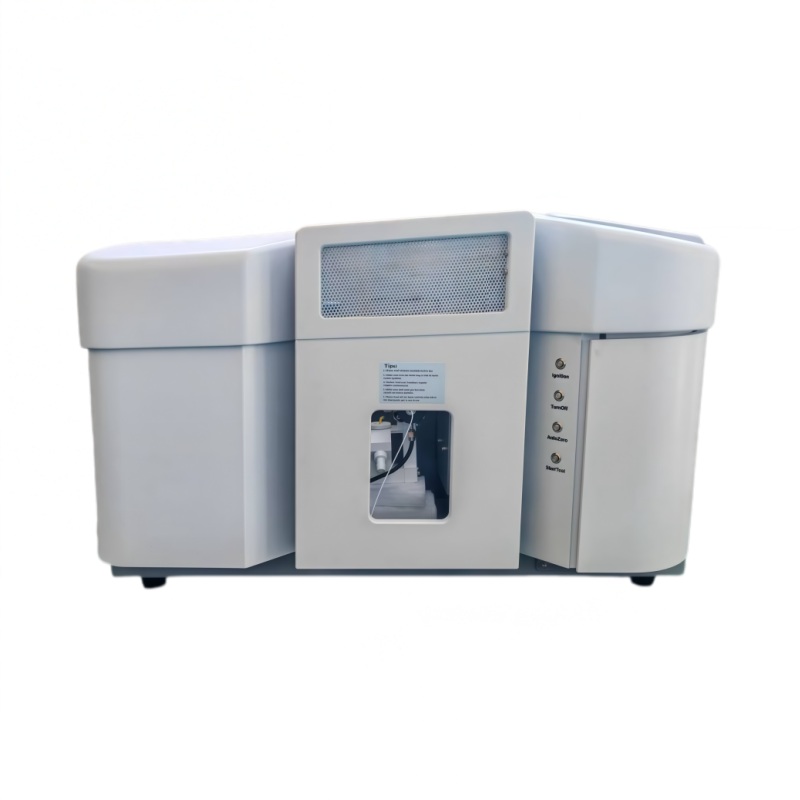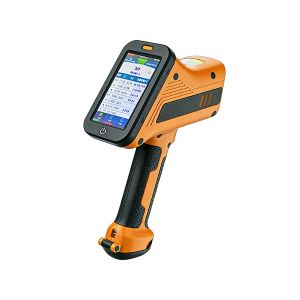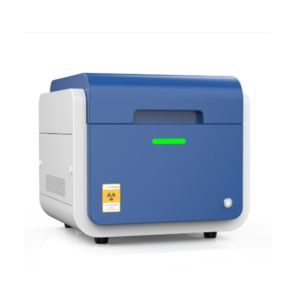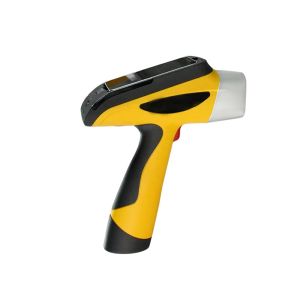
X-ray Fluorescence Spectrometer Machine xrf Machine Price portable Libs Spectrometer Price
 Handheld X-ray Fluorescence (XRF) analyzers have become the industry-standard tool for on-site metal composition identification. At their core lies XRF spectroscopic analysis technology, which provides rapid, non-destructive, and accurate elemental composition analysis.
I. Core Technical Principles: X-ray Fluorescence (XRF)
The fundamental principles of XRF analysis can be broken down into three steps:
Irradiation: An X-ray tube or radioisotope source built into the analyzer emits high-energy primary X-rays, which are directed onto the surface of the metal sample under test.
Excitation: The energy of the primary X-rays is sufficient to cause electrons in the inner shells of the sample's atoms to undergo a transition (be ejected), thereby placing the atoms in an unstable, excited state.
Detection: To return to a stable state, electrons from the outer shells of the atoms immediately transition into the inner-shell vacancies, releasing secondary X-ray fluorescence with specific energy levels. The energy of the X-ray fluorescence emitted by the atoms of each element serves as its unique "fingerprint" (characteristic energy). A detector captures these fluorescence signals and converts them into electrical signals.
II. The Process of Rapid Identification
Handheld analyzers achieve "rapid identification" through the following workflow:
Signal Acquisition: The instrument's probe is placed in direct contact with the sample; after a few seconds of irradiation, it collects the characteristic X-ray fluorescence signals emitted by the sample in real time.
Spectrum Processing: The built-in software system performs spectral deconvolution on the complex signals received by the detector, separating signals of different energy levels to generate an energy spectrum.
Algorithmic Analysis: The instrument employs advanced algorithms (such as the Fundamental Parameters method [FP] or the Empirical Coefficients method) to process the spectral data. By comparing characteristic energy peaks and their intensities, it precisely identifies which elements are present in the sample and determines their respective concentrations (expressed in percentages or parts per million [ppm]).
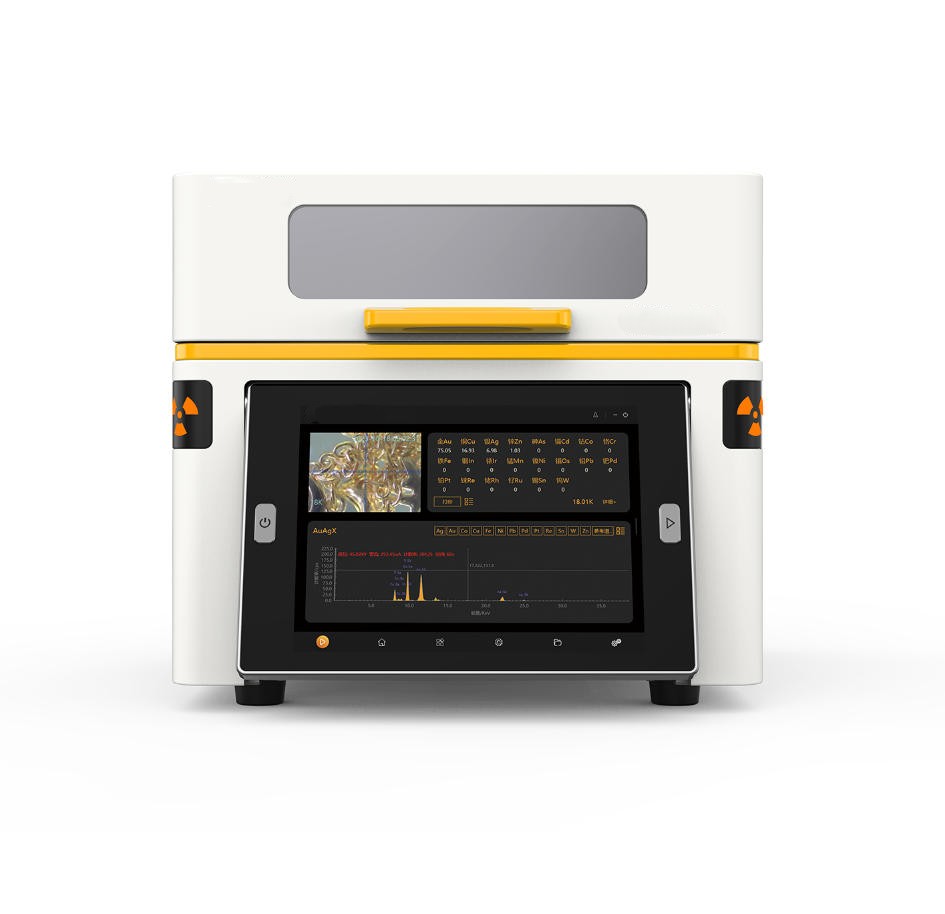
Result Output: The entire process is typically completed within 2 to 5 seconds, and the analysis results—including elemental composition and alloy grade identification—are immediately and clearly displayed on the instrument's touchscreen.
III. Technical Advantages and Application Value
The advantages of handheld XRF analyzers include:
Rapid and Efficient: Results are obtained within seconds, significantly boosting inspection efficiency and making the technology ideal for high-volume material screening (PMI).
Non-Destructive Testing: The analysis causes virtually no damage to the sample; no cutting or sample preparation is required, allowing for direct testing of finished products, semi-finished goods, or in-service equipment.
**Ease of Use:** Featuring an ergonomic design, the device is lightweight and portable; with simple one-button operation, it can be utilized by operators after only minimal training.
**Precise Results:** Capable of accurately analyzing a wide range of elements—from Magnesium (Mg) to Uranium (U)—the device delivers high precision and exceptional reliability.
Its applications span a broad spectrum of fields, including:
**Positive Material Identification (PMI):** Ensuring that pipes, valves, welding consumables, and similar components are composed of the correct alloy grades.
**Scrap Metal Recycling:** Rapidly sorting mixed metal scrap to enhance both recycling value and operational efficiency.
**Quality Control and Inspection:** Verifying material composition and preventing material mix-ups.
**Geological and Mineral Exploration:** Conducting on-site analysis of ore grades and elemental content.
Leveraging its core XRF technology, the handheld XRF analyzer condenses complex, laboratory-grade elemental analysis capabilities into a portable device, enabling instant, non-destructive, and precise analysis of metal composition directly in the field. It serves not merely as a powerful technological tool, but as a key driving force for enhancing industrial safety, quality control, and resource efficiency.