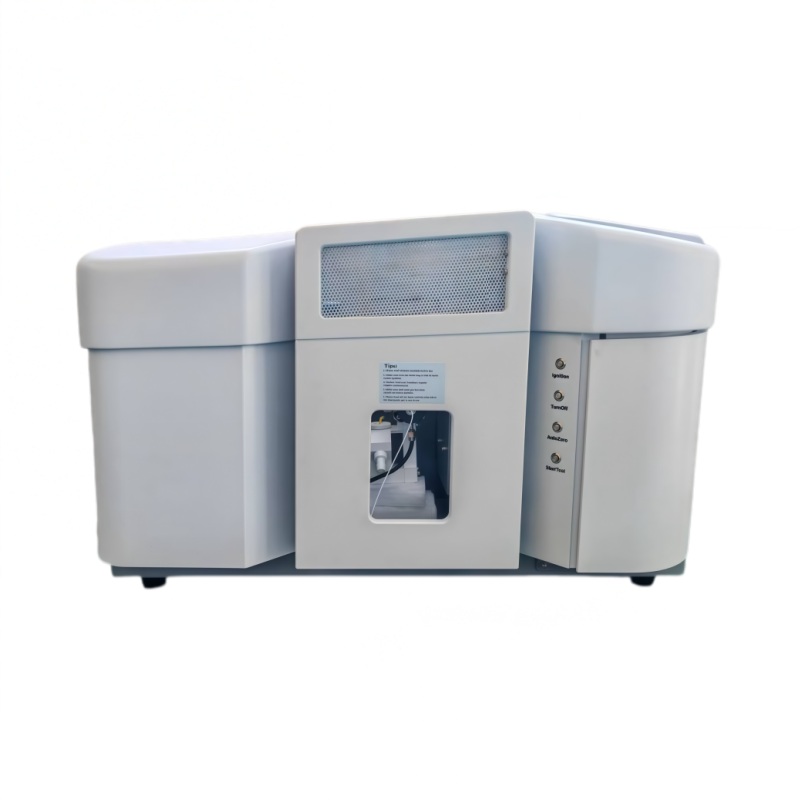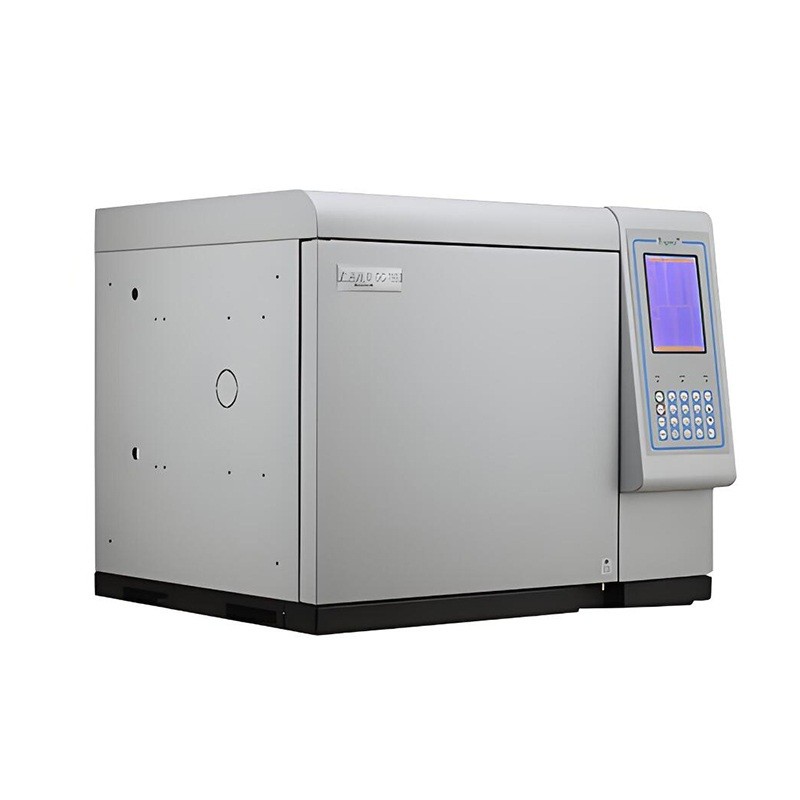
Gas Chromatograph for Gas Analysis (Top Configuration) GC-240 System Configuration: 5 valves/6 columns (packed column, capillary column)/TCD1, TCD2, FID1 detectors; (TCD2 detector can be expanded to include an FPD detector or FID2 detector) Suitable for: Analysis of various refinery gases such as natural gas, liquefied petroleum gas, flue gas, coalbed methane, biogas, ambient roof gas, FCC crack
Product Description
Product Introduction
Gas Chromatograph for Gas Analysis (Top Configuration) GC-240
System Configuration: 5 valves/6 columns (packed column, capillary column)/TCD1, TCD2, FID1 detectors; (TCD2 detector can be expanded to include an FPD detector or FID2 detector)
Suitable for: Analysis of various refinery gases such as natural gas, liquefied petroleum gas, flue gas, coalbed methane, biogas, ambient roof gas, FCC cracked gas, fuel gas, and recycle gas; analysis of various coal gases and similar gaseous mixtures; online systems for high-temperature and high-pressure catalytic cracking gas.
Standards: UOP539, ASTM D1945, ASTM D 1946, GPA2261, GPA 2286, GPA 2177, GB/T 13610-2003
Minimum Detection Concentration: Permanent gases TCD 50ppm, organic hydrocarbons FID 1ppm
Analytical components
Hydrogen, oxygen (argon), nitrogen, carbon monoxide, carbon dioxide, C1-C5 hydrocarbons, alkanes with C06 and above
Expandable to detect H2S, total sulfur, and C6-C16 alkanes
The GC-240 gas chromatograph system for gas analysis consists of three channels. Channel A comprises a 10-port injection valve with backflushing function, a 10-port valve with sequential backflushing function, three chromatographic columns, and a TCD detector. It analyzes components such as H2, CO2, CO, N2, O2, and Cl. Column 1 is used to backflush and vent components above C2, and pre-separates the mixed components (H2, CO, N2, O2, Cl) and CO2. Column 2 further separates these components. After the mixed components enter column 3, valve 2 activates to change the column sequence. CO2 is backflushed to the TCD detector, and the mixed components subsequently exit the column and enter the TCD detector. If He is used as the carrier gas, the total oxygen and argon content can be obtained. Channel B consists of a 10-port injection valve and a chromatographic column. It analyzes components such as H2/He. After H2 and He exit the column, the 10-port valve resets and backflushes to vent the remaining components, shortening the analysis time. Channel C
Solution 1: Composed of an autosampler six-way valve 4, a sequential switching six-way valve 5, and two capillary columns. After injection, most of the sample is vented through the split injection port, while a small amount enters column 5 through valve 5. Components prior to C5 elute from column 5 and enter column 6, where they are retained. When components above C6 have not yet elute from column 5, valve 5 switches to the backflush position, changing the column order between columns 5 and 6. Components above C6 are first flushed out and pass through the FID detector, detecting the total content of alkanes above C6. Components prior to C5 are separated by column 6 and then sequentially pass through the FID detector for detection.
Solution 2: Composed of an autosampler valve, an Al2O3 capillary column, and an FID detector. This can analyze and detect C1-C6 in a mixed gas.
If detection of C3-C14, H2S, COS, CH3SH, (CH3)2S, etc., is required, the configuration will be modified.
The configuration provided is for reference only. For specific analytical requirements, please call us and we will provide you with a comprehensive analytical solution. Data processing and quantification are handled by a dedicated natural gas workstation, which calculates parameters such as the calorific value (molar calorific value, mass calorific value, volumetric calorific value, relative density, and Wobbe index) for each component. Valve switching is handled by the chromatograph main unit.
Minimum detection concentrations for each component: permanent gases 0.005%–100%; organic hydrocarbons 1 ppm–100%.
Product Key Features and Advantages
1. High column loading capacity and high degree of automation; single injection yields the content of all components in refinery gas or natural gas.
2. H2/He is detected individually in a single channel, while O2 and N2 are detected separately; alternatively, H2 and N2 can be used as carrier gas in a dual-channel TCD detection.
3. Alkanes above C06 are detected as a single peak, while C1-C5 alkanes achieve baseline separation.
4. Three detector channels; TCD/FID/FPD detectors can be combined arbitrarily to meet the online detection needs of complex industrial gases.
5. Durable packed column and maintenance-free system flow improve work efficiency while simplifying the analysis of complex samples and enhancing operability.
6. Analysis time for refinery gas and natural gas can be as short as 10 minutes.
7. A third detector (FID2) can be added; capillary column channels are used to extend natural gas analysis (C3-C16).
8. A third detector (FPD detector) can be added to analyze H2S and components such as total sulfur and total organic sulfur, with a minimum detection concentration of 0.1 ppm.
9. The chemical workstation provides natural gas calculation software (to derive molar calorific value, mass calorific value, volumetric calorific value, relative density, and Wobbe index).
10. Suitable for all applications requiring the separation of H2, CO2, CO, N2, O2, and C1–C5 and C6+ hydrocarbons.
Detector Technical Data
| Item | Specification |
|---|---|
| Thermal Conductivity Detector (TCD) | |
| Structure | Semi-diffusion type |
| Power Control Mode | Constant current control |
| Sensitivity (Standard TCD) | S≥3000 mv·ml/mg (n-Hexadecane / Isooctane) |
| Sensitivity (HTCD High-sensitivity TCD) | S≥10000 mv·ml/mg (n-Hexadecane / Isooctane) |
| Digital Magnification | 2×, 4×, 6×, 8× optional |
| Baseline Noise | ≤10 μv |
| Baseline Drift | ≤30 μv/30min |
| Linearity | ≥10⁵ |
| Carrier Gas Flow Stability | ≤1% |
| Capillary Column Fitting | Optional |
| Electron Capture Detector (ECD) | |
| Detection Limit | ≤1×10⁻¹⁴ g/s |
| Linear Range | 10⁴ |
| Radioactive Source | Ni63 |
| Flame Photometric Detector (FPD) | |
| Detection Limit (Sulfur) | 5×10⁻¹² g/s (S in Methyl Parathion) |
| Detection Limit (Phosphorus) | 5×10⁻¹³ g/s (P in Methyl Parathion) |
| Linear Range | 10⁵ (P), 10³ (S) |
| Maximum Operating Temperature | 350℃ |
| Detection Method | Air-hydrogen flame spectroscopy |
| Photo detector | Top photo multiplier tube |
| Maximum PMT Voltage | -700V |
| Nitrogen Phosphorus Detector (NPD) | |
| Detection Limit (Nitrogen) | ≤5×10⁻¹² g/s |
| Detection Limit (Phosphorus) | ≤5×10⁻¹² g/s |
Application
1. Gas analysis in power transformer oil (GB/T 17623-1998, DL/T 722-2000, DL/T 703-1999)
2. Gas chromatography for safety gas analysis in coal mines (capable of continuous cyclic sampling and analysis of 32 points for 24 hours)
3. Air quality analysis (TVOC, benzene, total hydrocarbons and non-methane total hydrocarbons) (compliant with GB/T 50325-2001, GB/T 18883-2002, GB16927-1996); analysis of workshop exhaust gas and flue gas, and continuous online analysis of VOC, benzene and non-methane total hydrocarbons in flue gas for 24 hours
4. Water quality analysis (compliant with GB/T 5750-2006)
5. Analysis of various industrial fuel gases such as natural gas, refinery gas, cracked gas, and manufactured gas. (Simple single-valve type, broad-spectrum process dual-valve four-column economic type, broad-spectrum process three-valve four-column practical type, broad-spectrum process five-valve six-column high-end type, three-valve four-column TCD type, four-valve five-column dual TCD type, etc.; conforming to GB/T 13610-2003, UOP539, ASTM1945, ASTM D 1946 and GPA2261; custom-made according to specific user samples)
6. Coal gas and biogas analysis (six components: H2, O2, N2, CH4, CO, CO2, unique single-valve sequential change)
7. Sulfides in natural gas (unique single-valve sequential change backflushing method, detecting H2S, CSO, SO2 and total sulfur)
8. High-purity gas analysis, electronic industry gas analysis (minimum detection concentration can reach above 10 ppb)
9. Benzene and toluene analysis in gasoline (conforming to ASTM D3606; SH/T 0713—2002)
10. 11. Analysis of oxygenated compounds in gasoline (compliant with AZTM D4815 and SH/T 0633-1998)
12. Analysis of benzene, toluene, and aromatics in gasoline (compliant with ASTM D5580-1995, SH/T0693-2000)
13. Analysis of hydrocarbon composition (SOA) and monomeric hydrocarbons (PONA) in gasoline (detection of saturated hydrocarbons, olefins, aromatics, and benzene content using a specially designed olefin adsorption trap; compliant with SH/T 0741-2004)
14. Simulated distillation gas chromatography (compliant with SH/T 0558, ASTM D5307, D3710, D6352, D2887)
15. Blood ethanol analysis (compliant with Ministry of Public Security standard GA/T105-1995)
16. VOC analysis of cigarette packs (compliant with YC/T 207-2006), drug residue analysis, and ethylene oxide analysis in medical devices (compliant with GB/T 16886.7-2001), Solvent Residue Detection in Packaging Materials
17. Greenhouse Gas Dedicated Gas Chromatography (CO2, CH4, and N2O, 0.1ppm—100%)
18. Catalysis Evaluation, High-Pressure High-Temperature Online Analysis System (System chromatography customized upon request)
19. Process Gas Chromatograph (Industrial Chromatography), Sample Pretreatment, Analytical Cabin Construction, Multi-Path Sample Selection (Supports up to 32 sample selection channels), etc.